Category: Habit Guides

Step-by-step build-or-break-a-habit walkthroughs, always with a smallest-version starter step.

  • How to Stop Procrastinating (Even When You Want To)

    How to Stop Procrastinating (Even When You Want To)

    You know the scene, bestie. The task is due. You want to do it. And somehow you’ve reorganized your closet, watched three videos about cats and answered an email from 2024 instead. 🙃

    Plot twist: it’s not a willpower problem, it’s a wiring problem. If you’ve been searching for how to stop procrastinating, the first thing the research wants you to know is that procrastination usually isn’t about time management at all. It’s about feelings. And that’s actually great news, because feelings are something you can work with!

    Why this matters

    Procrastination is incredibly common. A big 2007 meta-analysis by psychologist Piers Steel estimated that 80% to 95% of college students procrastinate, especially on coursework (American Psychological Association, on Steel, Psychological Bulletin, 2007). So if you’ve ever felt like you’re the only one who can’t just start, you’re very much not.

    And the cost is real. Several studies in that meta-analysis linked procrastination to lower GPAs and exam scores. Another study, also summarized by the APA, found something sneaky: early in the semester, procrastinators reported less stress and illness than everyone else. By the end of the term, they reported more of both (APA). The relief comes first. The bill comes later. Learning to start is a skill worth building.

    What’s really going on: mood repair

    Here’s the receipts. Researchers Fuschia Sirois and Timothy Pychyl argue that procrastination is a form of short-term mood regulation (Sirois & Pychyl, Social and Personality Psychology Compass, 2013). When a task makes you feel bored, anxious, confused or overwhelmed, putting it off makes that bad feeling go away. Right now. Instantly.

    The problem is that the relief is borrowed from your future self. The task is still there tomorrow, and now it comes with extra stress and guilt attached.

    What this means for your Tuesday: if you can make the start of a task feel less awful, you take away the main reason you were avoiding it. You don’t need more discipline. You need a smaller doorway.

    Common mistake: beating yourself up

    This one surprises people. Being harsh with yourself about procrastinating tends to make the next round worse, not better.

    In a study of first-year university students, the ones who forgave themselves for procrastinating before their first midterm procrastinated less when studying for the second one (Wohl, Pychyl & Bennett, Personality and Individual Differences, 2010). Self-forgiveness lowered the negative affect tied to the task, so there was less bad feeling to run away from next time.

    So the myth callout is this: guilt is not motivation. It’s just another bad feeling your brain wants to escape. Being kind to yourself isn’t letting yourself off the hook. It’s clearing the path.

    The tool with the best evidence: if-then plans

    If there’s one technique to steal from this post, it’s the implementation intention. It’s a fancy name for a simple plan written as “If X happens, then I will do Y.”

    For example: “If it’s 7:00 PM and I’ve finished dinner, then I’ll open my laptop and write one sentence of the essay.”

    A meta-analysis of 94 independent tests, with more than 8,000 participants, found that people who made if-then plans reached their goals noticeably more often than people who only set the goal itself, with a medium-to-large effect (Gollwitzer & Sheeran, summarized in Universität Konstanz repository).

    Why does it work? Because the decision is already made. When the moment comes, you’re not standing there negotiating with yourself. That cuts down on decision fatigue and cognitive load, which is exactly the friction procrastination feeds on. No cap, it hits different once you know the mechanism.

    Why “just do it” advice doesn’t work

    If you’ve ever been told to “just sit down and do it,” you know how unhelpful that is. Here’s why, according to the mood-repair research.

    “Just do it” treats procrastination like a motivation problem. But most procrastinators are already motivated! They care about the task, sometimes too much. The thing standing in the way is the uncomfortable feeling that shows up the moment they think about starting.

    Pushing harder against that feeling tends to make it bigger. That’s why so many people end up in a loop: avoid, feel guilty, avoid again to escape the guilt. Each round adds a little more dread to the task.

    What actually helps is making the feeling smaller, not making yourself tougher. That’s why every step in the guide below is about lowering the emotional cost of starting: shrinking the task, deciding in advance, adding a little friction to your escape routes and letting go of yesterday. None of it requires you to suddenly become a different person. It just makes the first move cheaper.

    There’s also a difference between procrastinating and resting. Taking a planned break because you’re tired is recovery. Avoiding a task because it makes you anxious, while feeling guilty the whole time, is procrastination. If your “break” doesn’t actually feel restful, that’s a clue.

    How to stop procrastinating: a step-by-step guide

    Here’s how to put all of that together. Each step is tiny on purpose.

    Step 1: Name the feeling

    Before you start, ask: what feeling am I trying to avoid right now? Bored? Scared it won’t be good enough? Not sure where to begin? Just naming it takes some of its power away, and it tells you which next step to use.

    Step 2: Shrink the first step until it’s almost silly

    Not “write the essay.” Not even “write the intro.” Try “open the document and type the title.” The smallest version that still counts is the one you’ll actually do. Most of the resistance lives in the first two minutes. Once you’re in, keeping going is a lot easier.

    Step 3: Write one if-then plan

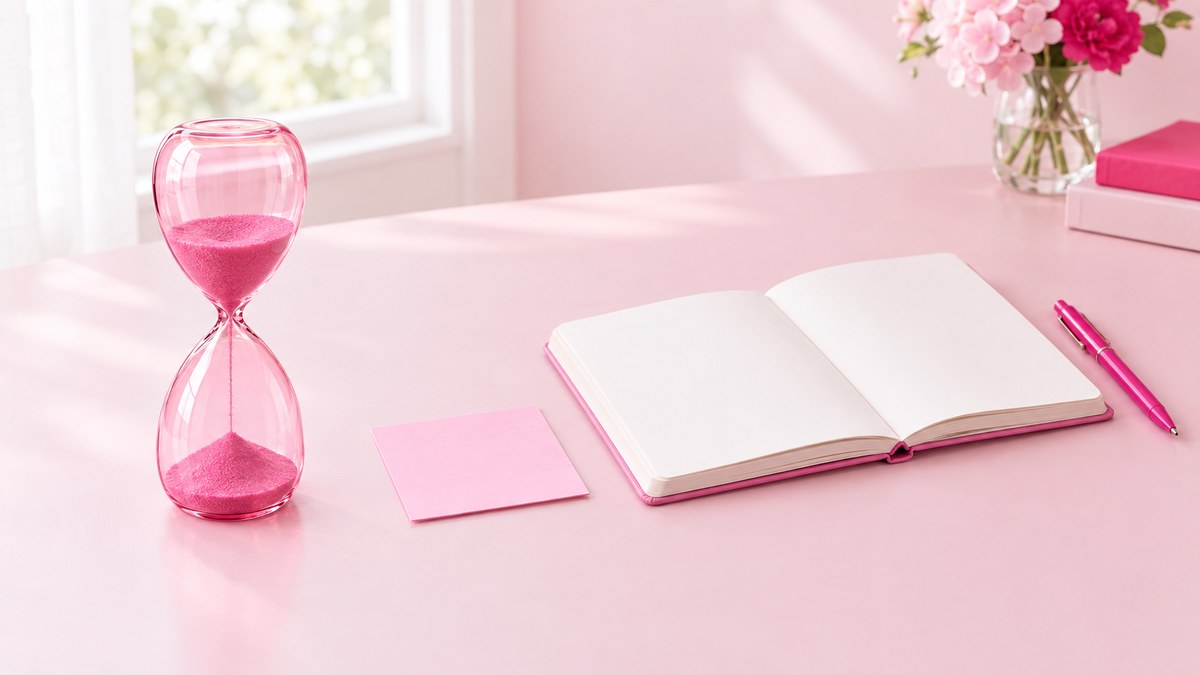
    Pick a time and a place. “If it’s 9:00 AM and I’ve poured my coffee, then I’ll open the budget spreadsheet.” Write it down somewhere you’ll see it. A sticky note on your laptop works great!

    Step 4: Make the distraction a little harder

    You don’t need to delete every app. Just add one small step between you and the thing you usually escape to. Put your phone in another room for 25 minutes, or log out of the site you always end up on. Small friction, big difference.

    Step 5: Forgive the last slip

    If you procrastinated yesterday, say it out loud: “Okay, that happened. Today’s a new start.” Based on the self-forgiveness research, this is not just being nice. It’s part of the strategy.

    What to do when the task is actually huge

    Sometimes the problem is that the task really is big, and your brain can’t see a starting point. In that case, your first task isn’t the task. It’s making a list.

    Spend five minutes writing every small piece you can think of, in any order. Then pick the easiest one. Not the most important one, the easiest. Finishing something small builds self-efficacy, the feeling that you can do this, and that feeling makes the next piece easier to start.

    Try this this week

    • Pick one task you’ve been putting off. Just one.
    • Write one if-then plan for it with a specific time and place.
    • Do only the first two minutes. If you want to stop after that, you’re allowed. (Most people won’t want to!)
    • Rate the “dread level” of the task from 1 to 10 before and after. Watch that number drop.
    • Forgive one slip out loud this week. Seriously.

    The Shift

    You’re not lazy. You’re avoiding a feeling, and you can shrink that feeling down to two minutes. Let’s go! ✨

    Habit Guide — Dana Whitfield, October 8, 2026
  • How to Stop Doomscrolling Before Bed

    How to Stop Doomscrolling Before Bed

    It’s 11:48 PM. You got into bed at 10:30 “just to check one thing.” You now know about three celebrity breakups, a war you can’t do anything about and a recipe you’ll never make. Your eyes are tired. Your brain is wide awake.

    If that’s you, you’re in very big company. Let’s fix it without pretending you’re going to throw your phone in a lake.

    Why this matters

    A 2025 survey from the American Academy of Sleep Medicine found 38% of U.S. adults say doomscrolling news before bed makes their sleep worse, and younger adults are hit hardest (AASM). In a study that tracked people night by night, using a device at bedtime was linked to about 20 minutes less sleep that night (PMC). Twenty minutes a night adds up to more than two hours a week.

    Why your brain won’t let you stop

    Doomscrolling isn’t a willpower failure. A 2025 study of 663 adults found doomscrolling was linked to poorer sleep quality, and much of that link ran through FOMO and “nomophobia,” the anxiety of being away from your phone (BMC Psychology). Your brain is scanning for threats and doesn’t want to miss one. Endless feeds never give it a stopping point, so it never feels “done.”

    The fix isn’t more discipline. It’s making the stopping point for your brain.

    The 5-step wind-down

    1. Pick a phone bedtime, not just a you bedtime. The AASM recommends powering down electronics 30 to 60 minutes before sleep (AASM). Start with 30. Set an alarm for it.

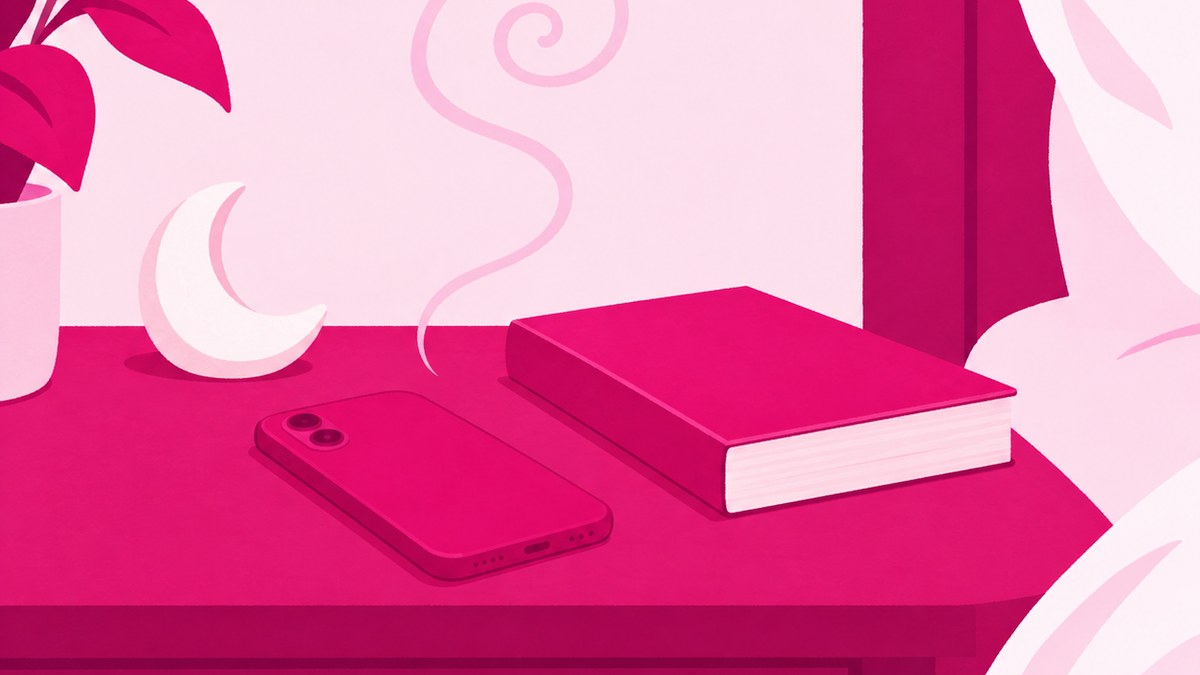
    2. Charge it across the room. The AASM also suggests keeping your phone out of the bedroom entirely (AASM). If you need it as an alarm, a charger by the door works. Getting out of bed to scroll is a tiny speed bump, and that’s all you need.

    3. Swap, don’t just stop. An empty half-hour is where the scroll sneaks back in. Pick one replacement: a paperback, a playlist, a stretch, a journal. Low light, no feed.

    4. Do your “last check” earlier. If news anxiety drives it, give yourself one scheduled check at dinner. Your brain knows it’s been done.

    5. Make the apps annoying. Log out, move them off your home screen or set an app timer for 10 PM. Friction beats willpower every time.

    Common mistake: going cold turkey

    Deleting every app on a Monday night feels amazing and usually lasts until Wednesday. Small steps stick better. One step for one week, then add the next.

    Try this this week

    Pick step 2 only. Charge your phone across the room for seven nights. Notice the night you forget, and don’t beat yourself up. By Sunday, check in: are you falling asleep faster?

    The bottom line

    You don’t need a week-long phone-free retreat. You need an ending to your day that the feed can’t take from you. Give your brain a stopping point, and it’ll give you your sleep back.

    Habit Guide — Dana Whitfield, October 1, 2026

  • Why You Keep Waking Up at 3 AM (It Is Probably Not Your Cortisol)

    Why You Keep Waking Up at 3 AM (It Is Probably Not Your Cortisol)

    You are awake. Again. The room is dark, nothing hurts, nobody called, and the ceiling looks exactly the same as it did last night at this hour. You reach for your phone to check, and there it is: 3:07.

    Then the second thing happens, which is worse than the waking. You start doing math. Four hours until the alarm. Three hours and forty minutes. You are now fully, alertly, furiously awake, and somewhere in the back of your head a wellness reel is telling you this is your cortisol spiking because your nervous system is dysregulated.

    Okay wait, hear me out, because the research here is so much more interesting than the reel! 🌙

    Why This Matters

    The 3 AM wake-up gets treated as a malfunction, and that framing sends people hunting for a hormone to fix. But the most likely explanation is structural, not hormonal, and it changes what you should actually do at 3:07.

    Sleep is not one long flat state. It cycles, alternating between non-REM and REM roughly every 90 to 110 minutes, with a typical night running 4 to 6 of those cycles. And the cycles are not identical copies. Non-REM, including the deep slow-wave stuff, dominates the first half of the night, while REM episodes get progressively longer and more frequent in the second half — early ones may last only a few minutes, later ones can exceed 30 minutes (Physiology of Sleep, StatPearls). Clinically the same pattern gets described as a first half dominated by slow-wave sleep and a second half that shifts toward lighter stages (Texas Health).

    So here is the reframe. Brief awakenings are a normal feature of every night at every age. What changes across the night is not how often you surface but how easy it is to notice and remember that you did. Early on you are buried in slow-wave sleep and surface without ever registering it. By 3 AM you are in the light, REM-heavy back half, where a surfacing becomes a memory. You are not waking up more. You are noticing more.

    That is the difference between a hormone problem and a perception problem, and it is the whole reason this guide exists. Your body is not betraying you at 3 AM. It is running the schedule it has always run, and you happen to be light enough to catch it in the act!

    Myth Check: the cortisol story

    The popular version says a 3 AM cortisol surge yanks you awake. This deserves a careful answer rather than a confident one, because the honest position is that the science is contested.

    Cortisol does rise across the back half of the night. Levels reach their low point in early sleep and climb ahead of waking as part of normal circadian preparation, beginning around 2 to 3 AM. That part holds up.

    What is genuinely under debate is whether waking itself triggers a distinct surge. A 2025 review in Brain and Neuroscience Advances examined a study of 214 healthy volunteers aged 18 to 68, with saliva sampled automatically every 20 minutes across 24 hours. At the population level, the rate of cortisol increase was no different between the first hour after waking and the preceding hour while participants were still asleep (The cortisol awakening response: fact or fiction?). The single best predictor of how much cortisol someone released was the level already reached during the hour before they woke up. In long sleepers, the maximum rate of cortisol release happened 97 minutes before waking — not after.

    And there was considerable between-subject variability, meaning some people genuinely do show a steeper rise than others.

    So the receipts say: cortisol is climbing at that hour, yes. Cortisol lunging up and hauling you out of sleep, as a universal mechanism? Not established. That is a real distinction and it matters! Overclaiming that debunk would be the same error as repeating the myth, so this post is not going to tell you your hormones are irrelevant. It is telling you they are a weaker explanation than the one sitting right there in your sleep architecture, and that the architecture is the part you can work with tonight.

    The Common Mistake That Makes It Worse

    Checking the clock. 📵

    This one has actual experimental evidence behind it, and the effect is not small. In a study of 60 sleepers, half good and half poor, participants instructed to monitor the clock reported substantially more worry about how long sleep was taking than non-monitors, and substantially longer time to fall asleep — poor sleepers who watched the clock estimated 60.3 minutes against 35.3 for poor sleepers who did not, and the effect showed up on wrist actigraphy too, not only in self-report (Sleeping with the enemy: clock monitoring in the maintenance of insomnia). Clock-monitors also logged more awakenings in the first hour after sleep onset, averaging 1.9 against 0.6.

    Read that again, bestie. The clock did not measure the problem. The clock participated in it.

    Because the number is never neutral. 3:07 is not information, it is a deadline, and the second you know it your brain switches from drifting to calculating — cognitive load at precisely the moment you need less of it. A normal light-sleep surfacing becomes a math problem with your alarm as the due date. That is the loop, and it runs on the one piece of data you keep volunteering.

    Plot twist: the fix is not more effort. It is removing the input.

    Try This This Week

    Small and specific, because the smallest version is the one that survives a Tuesday.

    1. Turn the clock away from the bed. Face-down phone, rotated alarm clock, watch in a drawer. Keep your alarm set — just make the time unreadable without deliberately getting up for it. This is the highest-value change on the list and it takes about 4 seconds.

    2. Give yourself the 20-minute rule. If you have been awake and frustrated for what feels like more than 20 minutes, get out of bed and do something calm and quiet in low light, then return when sleepy. That guidance, the breathing count below, and the nightstand notepad all come from the same clinical write-up on 3 AM waking (Texas Health). Lying there being annoyed teaches your brain that bed is where you get annoyed. And honestly, “feels like” is fine here — you are not checking, remember.

    3. Breathe on a count instead of on a plan. The 4-7-8 pattern: inhale for 4, hold for 7, exhale for 8. The counting is doing double duty, because it occupies the exact part of your mind that wants to run the timeline. Free, portable, works in the dark.

    4. Keep a notepad on the nightstand. If the 3 AM thought is a real task, write the words down and stop holding them. Paper, not the phone, because the phone has the clock on it.

    5. Reframe the wake-up out loud, once. “This is the light part of the night. This is supposed to happen.” It sounds too simple to count. It is the same move the research points at: the surfacing was always normal, and the distress was doing most of the damage.

    One honest boundary: if you are waking most nights for weeks, or you wake gasping or with your heart pounding, or daytime function is slipping, that is a conversation with a clinician and not a habit to tweak. Chronic insomnia and sleep apnea both have real treatments, and neither of them is a breathing count from a blog post. Your morning routine can wait — this one shouldn’t.

    The Shift

    You are probably not broken at 3 AM. You are in the lighter, REM-heavier second half of the night, where the brief awakenings that happen all night long finally become ones you remember. Cortisol is rising around then, but the claim that waking itself sets off a distinct surge is contested rather than settled. And the single most reliable way to turn a 90-second surfacing into a 90-minute ordeal is to find out what time it is.

    So tonight: turn the clock around. That is the entire assignment. If your sleep is fine but your afternoons fall apart, the afternoon slump guide is the companion piece, and the 60-second morning habit covers the other end of the same clock.

    You woke up at 3 AM. Your body was doing its job. Let’s go get some rest. ✨

    Habit Guide — September 24, 2026


  • How To Beat The Afternoon Slump When Your Body Clock Says Nap

    How To Beat The Afternoon Slump When Your Body Clock Says Nap

    It’s 2:47 PM. You are on your third coffee, your inbox is judging you, and you are one snack-drawer away from calling it. Bestie, I see you. Okay wait, hear me out: the afternoon slump is not a personality flaw, a lunch problem, or proof that you should have gone to bed earlier. It is a scheduled event on your biology’s calendar — and if you want to know how to beat the afternoon slump, you have to stop fighting the clock and start working with it.

    The move is smaller than any productivity guru will admit. Actually, it is three tiny moves. And they take less than fifteen minutes!

    Why This Matters: your 3 PM crash is a clock, not a vibe

    Everyone online will tell you the afternoon dip is about blood sugar, or the sandwich you ate, or that you “need more discipline.” Plot twist: the research says otherwise.

    The most cited review of the post-lunch dip — Timothy Monk’s 2005 paper in Clinics in Sports Medicine — put it in black and white: the mid-afternoon dip in performance and alertness is real, it is measurable, and it occurs even when the individual has had no lunch and is unaware of the time of day (Monk, Clinics in Sports Medicine, 2005). Take away the sandwich, take away the clock — the dip still shows up! Your biology scheduled this.

    Earlier work from the same lab traced why. In a controlled study published in Chronobiology International, Monk and colleagues tracked participants across a routine where lunch was replaced by hourly liquid supplements (so calorie intake stayed constant) and found that people who dipped had a stronger 12-hour harmonic in their circadian rhythm — a second, smaller trough sitting inside the 24-hour cycle. Their body temperature stayed flat from 10 AM to 3 PM instead of rising like the non-dippers (Monk et al., Chronobiology International, 1996). Translation for your Tuesday: your suprachiasmatic nucleus (aka your body clock, running the show from a tiny cluster in your brain) briefly eases off the alerting signal in the early afternoon. It is a feature, not a bug.

    Once you know the mechanism, “just push through” starts to sound like fighting your own hardware. And your hardware is going to win every time.

    The 15-minute reset: three tiny moves that actually work 🚶

    Here is where it gets fun! Sleep researchers have quietly figured out what beats the dip — and it is not another latte. In a randomized trial in the Journal of Sleep Research, twenty adults were cycled through four conditions: normal night sleep, extended night sleep, a short afternoon nap, and 150 mg of afternoon caffeine. Result: naps, caffeine, and sleep extension all reduced the afternoon dip on the Multiple Sleep Latency Test — but the short nap was the most effective, and its benefits held until mid-evening. A 15-minute nap outperforming extra night sleep, and honestly? Obsessed. (Horne, Anderson & Platten, Journal of Sleep Research, 2008).

    The receipts (aka the actual studies) point at three cheap, boring, non-supplement moves. Stack them.

    Move 1: The 10-minute walk (yes, that boring)

    I know, everyone says “just walk.” Okay but the data actually holds up. Across four experimental studies with 298 total participants, 10-to-15-minute bouts of walking produced significant increases in energetic arousal and shifts toward more positive affect — with the energizing effect landing right at the walk itself and a calming after-effect during recovery (Ekkekakis, Hall, VanLanduyt & Petruzzello, Journal of Behavioral Medicine, 2000).

    Not a run. Not “get your steps in.” Ten minutes, brisk-ish, ideally outside or at least somewhere with actual light on your face. The smallest version that still counts: one lap of the block, or up-and-down your longest hallway if the weather is not participating.

    Move 2: Light on your face, not just your screen

    While you are walking, the second thing is happening for free — your eyes are getting real light. In a workplace study in Physiology & Behavior, participants who worked under high-illuminance lighting (1000 lux) versus dim light (200 lux) reported less sleepiness, felt more vital and energetic, had shorter reaction times on a psychomotor vigilance task, and showed elevated heart rate and altered heart-rate variability consistent with higher physiological arousal (Smolders, de Kort & Cluitmans, Physiology & Behavior, 2012).

    Your indoor office is probably running at 200–500 lux. A cloudy day outside is 10,000 lux. Going outside for even a few minutes during the dip window is a real intervention, not a self-care aesthetic! Fifty times the light, for free.

    If outside is truly not happening (winter, meeting, whatever), open blinds and sit by a window for five minutes. Fluorescent overhead lighting is not enough on its own.

    Move 3: The coffee nap (only if you can)

    Here is the receipt-heavy version of “just take a nap.” In a 1997 study in Psychophysiology, Reyner and Horne tested 12 sleepy drivers in a monotonous 2-hour afternoon driving simulator after a 30-minute break. Compared with placebo, caffeine alone reduced driving incidents to about 34% of placebo levels. Caffeine plus a short nap under 15 minutes dropped incidents to 9% of placebo — a stronger effect than caffeine alone or nap alone (Reyner & Horne, Psychophysiology, 1997). The trick is the timing: caffeine takes 20–30 minutes to reach peak effect, and a nap under 20 minutes usually stays out of the deeper sleep stages that cause post-nap grogginess. Drink, then rest. You wake up as the caffeine kicks in.

    This is the “if you have any flexibility whatsoever” tier. Work-from-home Wednesdays, weekends, students between classes — this is the one.

    Common Mistake: fixing your morning to fix your afternoon

    The classic move when the 3 PM slump keeps happening is to go back and mess with your morning — “maybe I need to wake up earlier,” “maybe I need a different breakfast,” “maybe I need to skip lunch entirely.” Save the effort. That same Journal of Sleep Research trial found that extending night sleep by up to 90 minutes helped the afternoon dip less than a short afternoon nap or afternoon caffeine (Horne, Anderson & Platten, Journal of Sleep Research, 2008). More sleep the night before is great for a lot of things. It is not the highest-leverage lever for the dip specifically. The highest-leverage lever is what you do inside the dip window itself.

    Also — please — the answer is not a fourth coffee at 4 PM. Caffeine has a half-life of roughly 5–6 hours. A 4 PM latte is still 25–50% active in your system at 10 PM, which is a tax on the sleep you are already going to blame tomorrow’s slump on.

    Try This This Week

    Pick your dip window. For most people it starts 7–9 hours after waking, so if you’re up at 6 AM, plan for 1–3 PM. If you’re up at 8 AM, plan for 3–5 PM.

    Then, for the next seven days, run the smallest version:

    1. Day 1–3: Just the walk. Ten minutes, outside if possible, during your dip window. That’s it.
    2. Day 4–5: Add the light exposure. Walk on the sunny side of the street. Sit by a window when you get back. No screen for five minutes after.
    3. Day 6–7: If your schedule allows, try one coffee nap. Small coffee, then set a 20-minute timer, lie down or sit reclined in a quiet room. If you can’t nap, just rest with your eyes closed — the 1997 study found “nonsleep dozing” still worked (Reyner & Horne, Psychophysiology, 1997).

    Miss a day? Nothing broke. Start with the next dip. She’s staying — the habit, not the drama.

    After a week, ask one question: did the 3 PM cliff feel less like a cliff? If yes, that’s your new default. If no, adjust the setup, not your opinion of yourself. Move the walk earlier. Move the coffee later. Make the smallest version smaller.

    The Shift ✨

    The afternoon slump is a body-clock event, not a character test — the fix is a tiny, timed reset, not more willpower.

    Habit Guide — September 2026