Okay wait, hear me out, friend. It’s 5:30 PM, the sky is already doing its moody purple thing, and you feel like it’s 10 PM. You slept fine. You had your coffee. So why does your whole body want to clock out the moment the sun does? 🍂
If you feel tired when days get shorter, you’re not imagining it, and you’re definitely not lazy. Plot twist: it’s not a willpower problem, it’s a light problem. Your body runs on a clock, and in the fall that clock gets a lot less of the signal it depends on.
Why this matters
Here’s the receipt. The National Institute of General Medical Sciences says light and dark have the biggest influence on your circadian rhythm, the roughly 24-hour cycle that shapes sleep, alertness and hormones (NIGMS). Your master clock, a cluster of nerve cells in the brain, controls melatonin based on how much light your eyes take in. In the evening, it tells your brain to make more melatonin, and that’s when sleepiness rolls in.
What this means for your Tuesday: when darkness shows up earlier, so does the “time to wind down” message. Your brain isn’t broken. It’s reading the room, and the room got dark at 6.
And the clock change is coming. Daylight saving time ends Sunday, November 1, 2026, which pulls sunset an hour earlier overnight (timeanddate.com). If October already feels sleepy, November is about to make it louder.
The light you’re actually getting
This hits different once you know the numbers. A 2022 expert consensus in PLOS Biology recommended at least 250 lux of melanopic light at eye level during the day, no more than 10 lux in the 3 hours before bed, and 1 lux or less while you sleep (Brown et al., PLOS Biology, 2022).
Melanopic light is a fancy way of measuring the light your body clock responds to, not just what looks bright. And here’s the twist: a lot of indoor spaces don’t hit that daytime target. In the fall, when your commute, your classes and your workday happen in dimmer light, your clock gets a weaker “it’s daytime!” signal and a stronger “it’s night” one. ✨
Sleep science adds one more layer. Your sleep drive, which researchers call sleep homeostasis, builds the longer you’re awake. Pair a steady build-up of sleep pressure with an early melatonin cue, and that 4 PM slump suddenly makes sense.
What it looks like on a real fall day
Let’s walk through a classic October Tuesday, because this is where the science gets personal.
You wake up while it’s still dim outside, so your brain gets a weak morning signal. You head straight from your kitchen to a car, a bus or a classroom, and spend most of the bright part of the day under indoor lights. By the time you’re done, the sun is already low, and your evening is lit by phones, laptops and overhead lights that are too dim to feel like daytime but bright enough to blur the night signal.
Your body clock basically spent the whole day squinting. It never got a clear “go” in the morning or a clean “stop” at night. So you feel foggy at 3 PM, wired at 11 PM, and groggy again the next morning. Sound familiar? That loop is exactly what the light targets above are trying to fix, and the good news is that small changes move the needle!
Myth callout: “I just need more coffee”
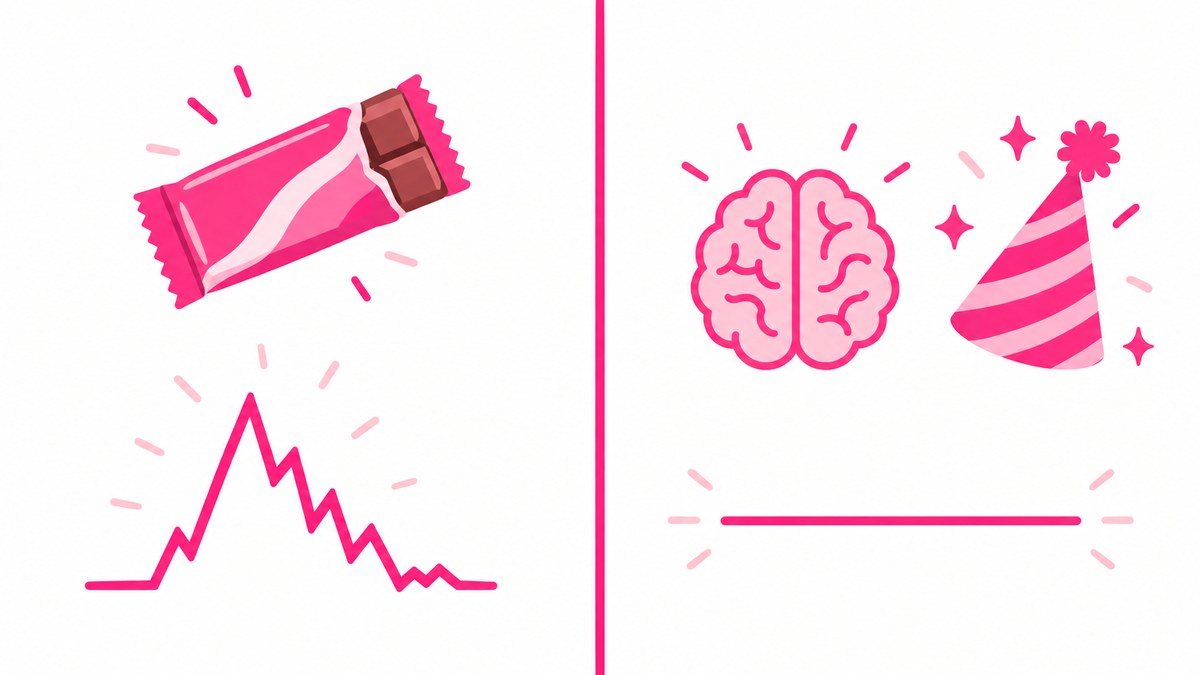
Feeling sluggish in the fall isn’t a caffeine shortage. It’s a light shortage. Coffee can mask sleepiness for a while, but it doesn’t give your clock the signal it’s missing, and caffeine late in the day can make it harder to fall asleep when you finally want to.
The other common mistake? Assuming every sleepy fall day is a big deal. Many people feel down or have the “winter blues” when days get shorter and feel better in spring, according to the National Institute of Mental Health (NIMH). Cleveland Clinic describes the winter blues as a milder version of seasonal affective disorder, or SAD (Cleveland Clinic).
But if the low mood is strong, sticks around for weeks, or gets in the way of school, work or relationships, that’s a conversation for a doctor, bestie. NIMH notes that SAD is a real form of depression and that it’s treatable. This post is about everyday tiredness, not a diagnosis.
Try this this week
The smallest version that still counts, one tiny habit at a time:
- Get outside within an hour of waking. Even 10 minutes on a cloudy morning gives your clock far more light than most indoor rooms. Walk to the mailbox, drink your coffee on the porch, take the long way to class!
- Move your desk toward a window. If you can’t get outside, get closer to the light you have.
- Dim things down after dinner. Lower the overhead lights and switch to lamps for the last 3 hours before bed, closer to that 10-lux target.
- Keep your wake-up time steady, even on weekends. Your clock loves a routine.
- Note your energy at 3 PM for 5 days in a journal. Then compare the days you got morning light with the days you didn’t.
The Shift
You’re not running low on energy. You’re running low on daylight, and that’s something you can work with. Let’s go! 🌞
Field Notes — Dana Whitfield, October 15, 2026